If your grammatical sensibilities were offended by the title, that preposition dangling like a snood, I offer my apologies – The Stuff Of Which We Are Made seemed cumbrous. Also it gives me a snipply little intro into the topic on hand today. So since the English language does not forbid it, and since it has a functional capacity for my purposes, it will remain.
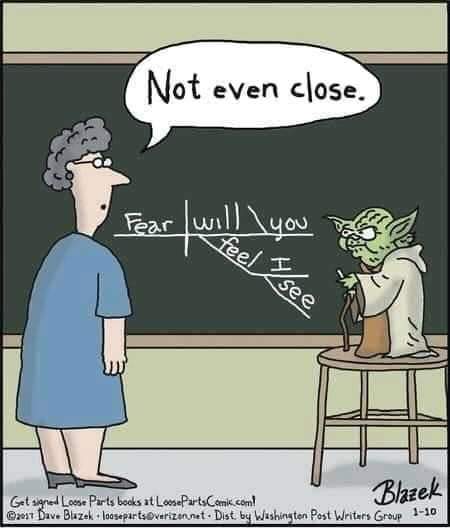
I remember diagramming sentences in high school, laying out the parts of a sentence on that rickety scaffolding. Seemed impersonal, like if you dismembered your cat and arranged its body parts in alphabetical order. No sir, I did not like it.
What I want to do is talk about information. Whoa now, don’t get too excited. You’re liable to dribble. I know talking about information sounds even duller than grammar, but if you stick with me I think there will be a decent pay off in the end. Anytime a topic is dissected it yields some interesting results. But dissecting information using information? It’s like a fetal pig dissecting itself and lecturing you on its innards.
When you get down into the guts of information, what is it? You are reading a bit of information right now, but what makes it information?
Information is never the object or idea itself, but encoded representatives of the real thing which have the ability to transcend time and space. We read the words of Jesus that lept from his mind two thousand years ago, from the near east, and lands in our morning coffee. And when I type the word “APPLE” you have a mental representation of an apple specific to your experience, apples you have known, but is not the thing itself. Information is always a stand in, it is the currency of ideas.
Years ago I was sifting through a free bin at a local thrift store when we lived in Maui. I stumbled across an old tattered book cover, faded red with age, entitled, In the Beginning was Information by Werner Gitt – an intriguing title, as it employed those three most famous inaugural words found in John and Genesis 1. Today, it is one of my most cherished books. Much of the nuts and bolts of this dissection will come from this highly analytical textbook.
The Third Entity
Up until the middle of the 20th century, it was assumed there were two fundamental entities in existence: matter and energy. Einstein linked these two with his most famous of equations, E=mc2, but other than that little backdoor the entirety of existence bifurcates into these two camps. But with the elucidation of the DNA molecule by Watson and Crick in 1953, it became clear that there was a third fundamental entity, one that was neither matter nor energy, but used both to present and express itself: information.
Examples of this are replete in the human experience. Popsicle sticks strewn across a table are a chaotic mangle of matter and energy in so much disarray, but arrange them with intention and you can spell out any number of words or symbols. What is different? No material change has been made, the weight and composition of the sticks remain, and both matter and energy have been dutifully conserved. Only, they have been arranged in such a way that they now carry a meaning, which is to say, I have added to the mix my will which transformed the chaos into a selected order. I have tamed matter and subdued energy to carry on their backs a message from my mind across time and space which your mind decodes and understands.
Writing this blog, I am transposing mental processes into a code and sending through the medium of matter (silicon, fiber optic cables, LCD screens, fingers pushing buttons) and energy (electricity, electromagnetic spectrum, radio waves, ATP required to produce biological movement) but the information originates in neither the matter nor the energy, but the sending mind. The internet does not weigh any more because the letters and words are arranged in such a way. In the repeated and continuous human experience, the only source of information is a mind. Anywhere we see a spot of information, we may safely assume a mind is behind it. And if it comes from a mind, it does so with a volitional transfer of meaning.
Like many things in life information is more complicated than it seems. How any kid learns to talk is sheer magic when you understand the levels of increasing complexity required to become proficient in the art of receiving and transmitting information. You and I are engaged in an extremely complicated linguistic dance each time we have a conversation or read a book. To get a hint of how complicated the exchange of information is, I am going to briskly tip toe through the five graduated levels of information that Gitt outlines in his book. Afterwards, we will skip over to biology to see if we can find parallels there, then finish it off with an important lesson.
Levels Of Information
As a guide through these five levels of information, I will use I Corinthians 16:13a “Be on your guard, stand firm in the faith; be courageous; be strong.” This way you can see the development morph in real time.
Level one: Statistics (Code)
Don’t get confused by the name, statistics is simply the level of code. Every system of information uses a code: an agreed upon set of symbols used to transmit the information. Binary code, Cyrillic alphabet, and Chinese characters are all examples of different codes. Code must be predictable and static – a sender introducing frequent changes would decrease the possibility the information would be received on the other end. I am using the Latin alphabet to disseminate meaning to other code users on this blog who also are also fond of the Latin alphabet. I share this alphabet with not only English speakers, but also other romance languages – French, Spanish and Italian – though in those other languages I know only the cuss words.
1 Corinthians 16:13 quoted above is also expressed in the Latin alphabet, though it was originally written in Koine Greek. If I used Koine Greek here it would look like this:
Γρηγορεῖτε, στήκετε ἐν τῇ πίστει, ἀνδρίζεσθε, κραταιοῦσθε
Makes no sense. I did not chose this code to share this verse because it is as foreign to me as it is you. Even if we change the Koine Greek to the Latin alphabet, it would be phonetically readable but equally as meaningless:
Gregorite stekete en te pistei andrizest krataiousthe
As an information sender, I am responsible for choosing a code the sender will understand. The fact that you have read this far is proof that the Latin alphabet couched in the bounds of the English language was the right choice for the dissemination of my thoughts.
Level two: Syntax (Words/Grammar)
The statistical code then needs to be organized into recognizable chunks called words. Only certain combinations of letters which have been agreed upon are used for specific words. The number of conceivable combinations of letters not used is much, much larger than the comparatively small number of “meaningful” words agreed upon. According to the Free Dictionary, there are over 150,000 five-letter words in the English language, of which Paul’s verb “guard” is only one, compared with 12 billion possible combinations (26⁵) of five letters. Exactly why a certain combination of letters stands as a signifier of a certain object or idea is a matter for another time, and delves into the fascinating kingdom of semiotics – the study of meaning making.
Now that our code has allowed us to have words, these words must be arranged according to grammatical rules. Grammar is also on this level of syntax. All languages have rules of grammar dictating action words, subjects, passive and active verbs, descriptors, modifiers and all those hellish bits of speech that made diagraming a sentence in fifth grade so unpleasant. But we are not yet at the level of information having any real meaning. A sentence can be grammatically correct and still be nonsense. “Four engines go green sign” syntactically is perfect, subjects and verbs being in their appropriate places, even got a couple adjectives thrown in there. Yet it is gibberish. In order for Paul’s command to take further shape and arrive at a meaningful command we need to bump up a level.
Level 3: Semantics (Meaning)
Now that we have a code and this code arranged into words and the words into a grammatically correct sentence, we are at the essential characteristic of the information – meaning. It is the meaning of the sentence that changes the sequence of symbols into information. Meaning is the only invariant property of information; languages can be changed, codes can be swapped, but the meaning must be present for information to exist.
At this point the “right words” must be used in the rubric of grammar so that the meaning is clear. Paul is not interested in any old “verb – preposition – pronoun – noun” combination, but the specific words “Be – on – your – guard”. This is the concept he wants the Corinthians to understand and act upon, and only a specific combination of words in the right order will be decoded in a way that will be successful for Paul’s purpose.
Yay! We are halfway through the slog, how we doing? Looking over the ground we have covered, it is fascinating to think that we are engaged in this process for nearly all of our lives. Communication is the basis of any relationship, and is this exchange of information is largely through the levels we are ascending. But there is more. So far the information has been in the corner of the sender. Now the sender meaning is packed in the right format, he floats it off into the ether, through sound waves, the electromagnetic spectrum, smoke signals, hieroglyphics or whatever, to land in the lap of the receiver. Now it is their turn to take the information and do something with it. On to the next level.
Level 4: Pragmatics
Information always entails a pragmatic aspect – what one will now do with the information. Having received the message “Be on your guard,” I now take action and become more vigilant, prepare my mind, patrol the perimeter, etc. All transmissions of information are meant to achieve an intended result, to cause action on the other end. This doesn’t always mean physically going and doing a thing, but also to understand or be reminded of something. My purpose of telling my daughter that I love her is not to just now make her aware of that fact, nor is there expectation she do anything. The action here is belief in the truth of the statement. Here is where the abstract becomes concrete, practical – in other words, pragmatic.
However, there is the chance that my information was unclear and caused you to act in a way that I did not intend. Perhaps you misread my message, maybe it was equivocal in some way. This leads us to the last and highest level.
Level 5: Apobetics
What the crap does that mean? I think Gitt invented the word actually. All it means is that the action taken by the receiver achieved the purpose for which the sender sent it.
Paul’s intention for the instruction, “Be on your guard, stand firm in the faith; be courageous; be strong,” would be achieved if the Corinthians then took actions of standing firm, displaying courage and strength.
At first, this last level seemed superfluous. After all, how many times have I given my kids instructions only to have them disobey? Am I to assume there is a problem with the informational content of my command? No, as mentioned above, the essential aspect of information is at the semantic level, where the meaning is packed in. But still, every piece of information has a purpose, and that purpose is the designation of the sender. For every result or action on the receiver’s end there is a corresponding conceptual purpose, plan or representation in the mind of the sender. Whereas the semantic level was the only invariant property of information, apobetics is the most important because it carries the premeditated purpose of the sender – the whole reason of sending the bit of information in the first place. All lower levels are the means of attaining this purpose.
Now, As Promised, Genetics
As mentioned above, in the repeated and universal human experience, information always comes from a mind. A birthday card, the blueprints for a condo, the Gettysburg Address, the instructions for setting up an Ikea desk, all come from a creative intellect.

Included in the informational realm is genetics. Not only is it included under this umbrella, it is the poster child for ingenious information. Just like any other kind of information in our experience, it conforms to the five levels of information.
All cells contain the same DNA strand which is specific to the individual. However, the type of cell determines which genes within the strand will be accessed (liver cell will manufacture proteins necessary for liver functioning, renal cells for kidney functions, etc). This informational process is most clearly seen during protein coding. When the cell needs to manufacture a protein, the strand is “unzipped” in the specific location of the DNA strand where the gene is found. Proteins are 3-dimensional structures made of a string of folded amino acids. There are 20 amino acids which combine in various orders and arrangements that make up the proteins, which themselves can range from the shortest chain of 44 amino acids up to a staggering 27,000 long amino acid chain.

Four nucleotide codons make up the alphabet of the genetic code – adenine, guanine, cytosine and thymine – abbreviated A,G,C, and T (also Uracil – see caption). These bases are arranged along the sugar phosphate backbone of the DNA in triplets, spelling out specific “words”. As an example, each protein manufacturing instruction begins with the “start” amino acid methionine, spelled A-U-G. To the left you can see the combinations of codons letters and the amino acid words they spell out.
After the strand is opened, codons line up with their partner (A with U, G with C) making a mirror copy of the gene. But, importantly for our purpose, the protein is not manufactured here. Instead, this copy is transcribed onto a piece of RNA that acts as a messenger, called mRNA. Just as in the APPLE example above, this message is not the protein itself but is an abstract representation of the protein, an order form sent to manufacturing.

The mRNA heads out into the jelly cytoplasm where it gives the information to a coupler called a ribosome that reads the words of the sentence and attaches the appropriate amino acid corresponding to each codon triplet. After completing the sentence and attaching the correct amino acids corresponding to the triplet codons, the now assembled protein chain must undergo a three dimensional folding process which necessitates the correct amino acids be found in the proper places for the cross bridging attachment to occur. If the sentence was misread or the words misspelled, the protein will not fold or fold incorrectly. Now the protein can go and live its truth.
To highlight the ingenuity of DNA, mathematically, having a quaternary alphabet with tertiary words balances the needs for genetic flexibility and storage space. Any other possible letter-word combination, such as a six letter alphabet with four letter words, would either not provide sufficient variability or necessitate vastly more storage space. Also, it is important to note here the arrangements of these nucleotide codons on the sugar-phosphate backbone of the DNA has no scientific explanation. In other words, each letter has equal affinity to the backbone. The order is not chemically necessary and the entire genome of codons could just as easily be scrambled up and would snap into the DNA backbone just as happily, much like the colorful children’s magnet letters have equal attraction to the magnet board and only take on meaning when a mind arranges them in a specific sequence.
The genetic code meets all the requirements of information. Statistically, the agreed upon code between sender and recipient (DNA and RNA) is the four letter nucleotide alphabet. Syntax requirement is met with only specific combinations of nucleotide bases making one of 20 amino acids used in the body. Semantically, the amino acids must be arranged in specified order so that its binding sites meet when the protein is folded. Pragmatically, the messenger RNA takes action on the coded message, manufacturing within the ribosome a protein which does not yet exist, from the instructions given by the gene. Lastly, that newly manufactured protein fulfills the requirement of the sender by spitting out a shiny new protein ready to perform its function.
The Payoff
Putting this all together, we have looked at the five levels of information and the basic requirements of its use. Added to this we take our repeated and uniform experience that information comes from a mind. This transmission is the dispatching of meaning from a sender to a receiver. Since it is clear that DNA meets all aspects of information, and information is the encoding and transmission of meaning from a mind, and every one of the 37 trillion cells that make up your body is built and runs on this information, we can conclude we are the product of a Mind and that you are literally made of meaning.
This is not equivocation, as though I am conflating linguistic meaning with purposive meaning. Or rather, there is no equivocation because on this level, they are the same. Step back and think. The specific string of codons is arranged in your DNA like letters and words are laid out in a book or poem. You were written the way you were in accordance with the Author’s purpose.
This is balm to the soul of American youth pining for identity. Fifty years of godless education has left a cavity that extends deep into the soul and has left no place for purpose. Actively students are taught they are so many chemicals fizzing at a certain temperature, and vehemently attack any hint of divinity twisted up in their cells. Surgeries excising body parts because they do not accord with mental perception, are increasing. Drifting further, young men and women have abandoned their body, it being the end result of accidental forces, retreating to the ghostly attic of their minds, hoping for some identity to keep out the rain. When all the time we have the resounding message from God written into the cell of the body, literally written on the bones – you mean something, you were made on purpose.
Enough of this parley with an absconded science. Let us state the obvious based on observation, based on repeated experience, based on the true definition of science – the discovery of God in the universe: God created mankind with purpose and meaning and He has written this large in tiny letters in the midst of us. He has knit us together in the womb. And if such exquisite design went into the operational substrate of a protein made for the menial job of carrying other proteins, how much greater is his purpose for your life in this world? If such care and ingenuity went into fashioning the language, how much more glorious the novel?
Oh, the depth of the riches and wisdom and knowledge of God! How unsearchable are his judgments and how inscrutable his ways!
Romans 11:33 (ESV)

 Thought Butter