Disclaimer
About two thousand years ago, a man wrote a letter. That ‘about’ ought to satisfy most people; any date more specific given the distance between us in 2023 and whatever year it was ‘about’ two thousand years ago is negligible. But this letter is so important, and has such far-reaching consequences, that we need to know specifically if that letter was written one thousand nine hundred and fifty-eight years ago, or one thousand nine hundred and twenty-eight years ago – a small matter of thirty years.
Why should anyone care about a measly thirty-year difference so long ago? That is a very good question. And the answer is because that thirty-year difference has a profound impact on how you live your life, how you understand your purpose, and how you read the entire Bible.
Not a Bible reader? Doesn’t matter. The end of history mentality assumed from the letter has been wedded to our entertainment, our politics, our philosophy, even our science. These thirty years from so long ago speak even to the secular mind of today, its expectations, and how, as author Haruki Murakami puts it, “Everyone, deep in their hearts, is waiting for the end of the world to come.”
This series of posts will be an extended book report, coupled with some of my own opinions, on the dating of a personal correspondence from a banished man on an island to his friends back on the mainland – it is about the dating of the Revelation of John the Apostle. It is an analysis of whether that letter was written in the year 65 AD or 95 AD. If that is not your brand of whiskey, I recommend you mosey on by. But before you do, read the introduction below, where I will try to make the case for why you should care about this.
Introduction To The Series
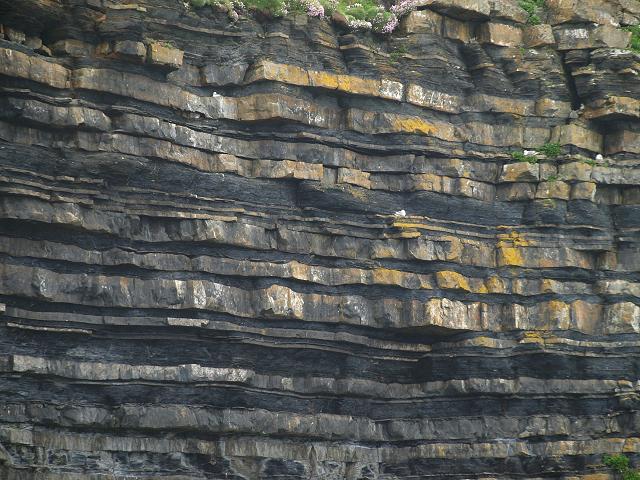
Geology is rather drab. I have never met a geologist who was any more animated than the specimens they study. They make archaeologists look like, well, like Indiana Jones.
But buried in geology is a profound dichotomy. When looking at the layers of strata in the Grand Canyon, say, a geologist has to decipher how such a striped stack of pancakes came about. There are two explanations for this presentation. It either came about by incremental sediment deposition and erosion, with each layer representing millions of years. Or it was stacked rapidly through liquid sediment in water – a flood. There are only two options. It is either a uniformitarian explanation where the processes of erosion we see at work today were the same at work back then. Or a cataclysmic explanation of a sudden, violent happening, something that had not happened on the same scale before or since. Nobody has any suggestions for a third alternative.
There is no small difference between these views. One takes billions of years. The other takes a few months. How we interpret the data and the conclusion we come to through a geological survey very quickly spills out of the sciences into a profound metaphysical dilemma. If the strata can be shown to be deposited through a cataclysmic process, then the billion-year explanation is false. If the billion-year explanation is false, then so is Darwinian evolution, for time is really the only saving grace for the hobbling theory. And if there is no feasible process of evolution, then we find ourselves face to face with some terrible realities, suddenly open and naked before a Creator with whom we have to do.

How we interpret this historical matter matters. The implications for how we view our shared history, present purpose, and future destiny are locked up in the rocks. Boring geology, the most cornering of the sciences.
For our purposes, we are not looking at rock pages stacked in a canyon, but John’s letter to the seven churches of Asia Minor. Just as in strata, there are two divergent opinions as to when the letter was written, and what conclusions we draw from the data have profound implications for how we understand God’s plan in history. To say that each position offers as different a conclusion as the strata debate is no exaggeration.
The two positions for the date of Revelation are between the early date of 65 AD and the late date of 95 AD. John wrote the letter while banished to Patmos, either under the reign of Nero (54-68) or Domitian (81-96), respectively. How we interpret this small matter of thirty years has huge ramifications because in this letter, John sees cataclysmic and seismic events that will shake and shape the spiritual and physical world. Depending on the date, these events have already happened or are about to; either in the far past or the near future.
Why is it only between these two options? It is because we have some boundaries given to us. It was written by John the Apostle at some point after Jesus ascended and before John died, which is generally accepted to be in the late 90s AD. The suggestion of the later date almost exclusively rests on one piece of external evidence, that of Irenaeus, but from this assumption, scholars have interpreted the internal evidence (indicators within the letter) based on what was happening in the Roman Empire under Emperor Domitian. On the lower end, scholars find internal clues in the letter that line up really well with the odious reign of Nero, who died in 68 AD, and who is probably one of the worst humans who ever lived, as well as some external indicators to place it here. So there you have it, 65 or 95. Nobody has any suggestions for a third alternative.
After scouring and weighing the data, if we conclude a late date authorship, we find no fulfillment of these prophecies in the historical record immediately following their writing in the early second century. This means, according to the general consensus, the traumatic predictions have not yet occurred; not only were they in John’s future, they are in ours as well. This is called the “futurist” position for reasons that I trust are clear. Practically, this means we are ever on the precipice of the declining influence of Christianity. The kitchen of our future is cooking up Christian persecution with mass apostasy as an appetizer. The Antichrist, the Beast, the four horsemen, terrifying astrological signs, the rapture – all of these are just off the starboard bow. If the visions of Revelation mean imminent apocalypse in our future, then our Christian efforts will necessarily be impacted by this belief, even truncated. No one, when given a six-month prognosis, is thinking of where he will be or what he will be doing in six years. He may really enjoy and live to the fullest the time he has left, but all plans for the distant future evaporate by the most reasonable fact that he will not be alive to live it.
However, if we look at the historical data and find it points to an early date, then things radically change. If John wrote in 65 AD, we find that there is a trove of historical happenings under the calamitous reign of Nero that are viable candidates for fulfilled prophecy. The visions of John have an immediate fulfillment in the judgment on Jerusalem and the salvation of the Christians in 70 AD. This means that John made a prophecy, and that prophecy happened exactly how he said it would, a fact which can buttress our call to repentance to a world convinced of its own sovereignty. This also means that what we thought was a gathering lightning bolt getting ready to discharge on our near future has already struck in those woeful years of 65-70 AD. In other words, no end boss Antichrist, no rapture, the horsemen have already galloped by, no Russian Kings of the North, no whores astride beasts rising from the foam, no condensing of Christianity to a few thousand huddled masses waiting for the guillotine.
Most encouragingly, this also means a sure hope of progress, as we continue to work with the Holy Spirit to expand the kingdom of God, as the Church has been doing over the past two thousand years. The Lord Jesus will continue, as he has been, to “reign until all his enemies have been made a footstool” (1 Corinthians 15:25). It is as though a man learned that, not only was the six month prognosis a mistake, but that by some happy chance, he will live six hundred years. His future opens to myriad possibilities that before, may have been noble and faith-filled, but practically were useless given a six-month expiration date. Indeed, his future is now blossoming with impossibilities that present him, given an abnormally long lifespan.
Like the geologist, we have two stories in front of us, both explain the strata but give widely different accounts for how they came about. Our choice is between an early or late date for John’s letter. Did the cataclysm happen in the past, or is it looming over our future?
Say what you will about your imperviousness to this matter, that you will live the same way regardless of how you view the future, whether the Lord comes soon or late. But there is no way that our expectations do not influence our planning and current trajectory. We all live our lives in light of future expectations. If a telephone pole is in your immediate future, then you presently turn the steering wheel. That nest egg you are growing is fed by expectation.
One of the reasons I want to address this is that it was never addressed for me. Neither was it mentioned in any church any of my friends grew up in. In fact, I have not met one person in my life who grew up with this knowledge being taught as even a wrong but viable alternative. I think this is largely because there was one story that was so convincing and provocative that it captured the imagination. And the apocalypse is nothing if not fun to think about. But this is not new stuff; in the early 20th century, the early date was not only robust, but the majority view, and the postmillennial belief was thriving.
Secular Matters
As I mentioned above, this topic matters to the secular world. At the height of the covid pandemic, I had more than one person at work ask me if I thought this was the end of the world, the apocalypse. These people were not Christians. I told them no, and went on to explain what they understood to be the apocalypse in Revelation already happened. They were visibly relieved. This reveals the depth to which this end times mentality has seeped into the bedrock of our civilization that even the non-fruiting plants drink its water.
An atheist friend of mine, who is quite antagonistic to Christianity, was encouraged to hear the perspective that it is the Christian’s purpose to expand the kingdom of God on the earth, making things better, righting injustices, and caring for the earth as stewards. This is because all the Christians he knew were of the ilk that it’s all going to burn, so what’s the point of fixing the drywall?
Media eats this up. How many manifestations of the future apocalypse can you think of sitting in your chair right now? Armageddon, World War Z, Left Behind series, End of Days, 2012…Sharknado, the list goes on. The apocalypse has captured the secular imagination, and all of these are the direct result of a late date for Revelation.
Speaking of World War Z, there are other zombie eschatologies out there that are convinced their destiny is to rule the earth. Marxism is nothing if not eschatological with a communistic utopia. Islam expects to dominate. Rock-ribbed atheists believe that one day, after they outthink all the dummies, religion will be a thing of the past and we will all live in peace with our cyborg brains. Christians? We plan on a slow crumble followed by a massive internal dismantling and the general abandoning of the standard until Jesus comes and rescues us. There is a straight line between the late date and the vacuum being created by Christians as we retreat, looking to fulfill the presumed prophecies. I do not say this to imply cowardice, not at all. I just say there is an obvious and natural path leading from one to the other.
Without getting too much into the weeds of the geopolitical struggle between Israel and Hamas, the dating of Revelation also applies here. American foreign policy, at least in part, has historically been influenced by Dispensational (think “Left Behind Series”) Premillennial eschatology, which necessitates a late date. Jews inhabiting the Holy Land are the antecedents to Christ’s return. Religious leaders, lobbyists, and political PACs have actively sought to influence presidents and congress to side with Israel specifically because of their eschatological belief, which, again, necessitates Revelation be written in 95 AD.
Science itself is obsessed with the apocalypse. I say ‘science’. I mean, of course, the codependent relationship between the media and purchased scientists. How many predictions of imminent climate collapse have we already lived through, and that now litter the history books as failed? Does this dissuade the predictions from continually being made? Does this extremely poor track record of being right make the public dubious of future predictions? No, it does not. The public opens its maw and gulps down everyone.
Is there any other thirty-year period in history where the difference matters as much to as many avenues of our lives as that between 65 and 95?
How this will work
I am going to work through Kenneth Gentry’s Before Jerusalem Fell, his treatise on an early date for Revelation. He splits his book up into the external and internal evidence for his position. Not all of his points will be mentioned, as there are many, and at which point you could just read the book (which I recommend), but I will highlight the salient issues and the observations I found most convincing.
I was thinking about just posting this whole thing in one go, but it’s wicked long, and seeing how the average attention span of a reader lasts about as long as two squirrels mating, I am going to break things up. The next post in this series will cover his introduction to the issue and external evidence, followed by a post on the internal evidence, and ending with some of my own thoughts on the matter.
In closing, this kind of thing is much like geology – it can be boring and isn’t for everybody. Nonetheless, it makes up the ground under your feet; you will always be standing on something.

 Thought Butter