The following is a general outline of a talk I gave at our first Men’s Advance. Well, call it a well-contoured outline…
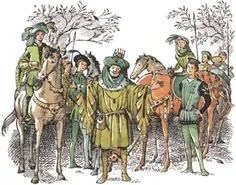
CS Lewis was the brightest Christian philosopher of the 20th century. He could lay out a theodicy that would have PhD candidates white-knuckling his heady philosophy, yet narrativize the same concept such that a third grader could apprehend. Consequently, he summarized the qualities of manhood through a minor character in the last pages of a children’s book in a way others have done less well in whole books with all kinds of adult words.
Lewis’s fifth book in the Narnia series, The Horse and His Boy, has King Lune carry out this task for Lewis.
The book follows Shasta, an orphan raised as a slave in the wicked kingdom of Calormen south of Narnia, across the desert. After coming across a talking Narnian horse, Bree, they decide together to escape the harsh life under the Calormen slavery and make their way up to Narnia. On their way, they discover a secret plot of the Calormen king, the Tishroc (may he live forever), to send a war party to take Archenland, Narnia’s friendly southern neighbor. From there, they would mount a war on Narnia itself. Shasta and Bree race across the desert, successfully warning the King of Archenland, King Lune, of the attack, who quickly mounts a counteroffensive and defeats the invading hordes. After the battle, it is discovered that Shasta is the long-lost son of King Lune. Not only does he have a kingly father, but a brother, Prince Corin, who was the (reluctant) heir to the throne. In a final twist, it is discovered that Shasta, whose given name was Cor, is the elder twin of his brother Corin and first in line for the throne. All of this happens so fast, Cor is not sure he wants any of it.
After King Lune sends everyone off to bed after the battle, he tells Cor that he is to be King. Here is the exchange:
And presently, as was certain to happen sooner or later,
King Lune said it was time for young people to be in bed. “And
tomorrow, Cor,” he added, “shalt come over all the castle with
me and see the estres and mark all its strength and weakness:
for it will be thine to guard when I’m gone.”
“But Corin will be the King then, Father,” said Cor.
“Nay, lad,” said King Lune, “thou art my heir. The crown
comes to thee.”
“But I don’t want it,” said Cor. “I’d far rather—”
“’Tis no question what thou wantest, Cor, nor I either. ’Tis
in the course of law.”
“But if we’re twins we must be the same age.”
“Nay,” said the King with a laugh. “One must come first.
Art Corin’s elder by full twenty minutes. And his better too,
let’s hope, though that’s no great mastery.” And he looked at
Corin with a twinkle in his eyes.
“But, Father, couldn’t you make whichever you like to be
the next King?”
“No. The king’s under the law, for it’s the law makes him a
king. Hast no more power to start away from thy crown than
any sentry from his post.”
“Oh dear,” said Cor. “I don’t want to at all. And Corin—I
am most dreadfully sorry. I never dreamed my turning up was
going to chisel you out of your kingdom.”
“Hurrah! Hurrah!” said Corin. “I shan’t have to be King. I
shan’t have to be King. I’ll always be a prince. It’s princes have
all the fun.”
“And that’s truer than thy brother knows, Cor,” said King
Lune. “For this is what it means to be a king: to be first in every
desperate attack and last in every desperate retreat, and when
there’s hunger in the land (as must be now and then in bad
years) to wear finer clothes and laugh louder over a scantier
meal than any man in your land.”
There are three principles of kingliness here that King Lune packs into a few sentences from which we can glean important lessons of manhood and fatherliness.
Principle #1: Kings are Under Law
King Lune introduces Cor to the Law that exists above every Archenlandian, to which they are bound, especially the King. Law spells out the right and duty of regal succession, and no one may mess with it, the King least of all, for it is the Law that makes him King.
Cor (Shasta) does not want the responsibility that has serendipitously been dropped right at his feet, and tries to wriggle out from it in two different ways: abdication and abuse. First, he tries to abdicate by simply saying he doesn’t want the responsibility of the throne. Too bad, is the essence of Lune’s reply; the king is bound by law. He can no more abandon his post as king than a sentry guarding some podunk outpost on the skirts of the Lantern Waste. Thwarted in this attempt to abdicate, Cor pivots towards abuse and reasons that since the King is the highest authority, can’t he just change the rules and make whoever he wants king? Again, King Lune corrects Cor. He can neither niggle his way out through abdication, nor can he abuse the law by changing it.
Two points follow for men.
- Identity: The Bible identifies men as heads of their families
- Boundary: The Bible defines the boundaries of this headship
Principle #1.1 Identity
For the husband is the head of the wife even as Christ is the head of the church, his body, and is himself its Savior.
Ephesians 5:25
Just as Archenland’s Law ruled over the King, so the Bible rules over men; just as the office of King derived its powers from the immutable Law, so the office of head derives its identity from the Bible. In the context of marriage and family, the Bible calls men to headship. Paul is making an ontological statement about a man’s identity. Neither qualifications nor justifications are required for it to be so; once he makes his marriage vows, he assumes this position.
Headship is a hierarchical position. Hierarchy in the Bible is explicit and unapologetic. Creation itself is hierarchical. This is not something to be ashamed of or to avoid. It does not mean the man is better and the woman lesser; they are equal vessels of the image of God with different positions assigned in the organization. There can be only one head per body; as Voddie Baucham adroitly observed, “anything with two heads is a monster.” Much rides on his authoritative presence, patiently and sacrificially serving his family by leading. In Christ, God ties hierarchy directly to sacrifice (John 13, Philippians 2). So, a man abdicating the hierarchy of headship is demolishing his ability to serve; he can’t serve like Jesus without being a head like Jesus.
Principle #1.2 Boundaries
Paul not only defines the role for men in the family but also his boundaries. Just as Christ gave himself up for the Church, men must give up their lives for their wives. It truly is a servant headship. He is given his position of hierarchy so that from there he can serve. Christ’s glory is seen in the distance between his dignity and diminution; he rightly has the highest position, but made himself the lowest position. Marriage is a metaphor, and in this metaphor, men mirror Christ’s fervent love and sacrificial demeanor towards the object of His affection. As such, men may not abuse their role as husbands, but are to love their wives “as their own bodies” (v. 28).
Men may not opt out of headship for a lesser role in the organization, even if they feel unqualified. Neither do men possess the authority to change their job description. He may not abdicate his authority, nor may he abuse it as though he married a serf to work his lands and bear him children. He is to be a head in the pattern of his Head. Men exemplify their headship by first submitting to their Head, Jesus Christ. Abusing his office demonstrates a lack of submission.
Concluding the point, men have been given an identity as heads of the family: he is called up to this position by God, not by his qualifications, competency, or desire, so that he may never abdicate from lack of any of these. And, because he is called by God, neither may he alter the job description nor abuse his headship. He is to be a servant head.
Principle #2: Kings display First In, Last Out Responsibility
Having established Cor’s identity as future king, King Lune teaches Cor that kings accept a first-in, last-out responsibility. Kings do not command the plebeians to advance with their pitchforks and hay wagons while he remains a safe distance behind the archers. He is in front, naked sword angled towards the enemy, riding his war horse at full tilt, his foot soldiers breathlessly trying to keep up with his charge. And if things turn sour in battle, he covers the retreat, making sure all the advancing arrows of the enemy are aimed at his chest and not at the backs of his soldiers.
Two points for us men:
- Leading versus Check signing
- Covering the failures
Principle #2.1 Leading versus check signing
Fathers, do not provoke your children to anger, but bring them up in the discipline and instruction of the Lord.
Ephesians 6:4
Identity always comes before action. After identifying men as heads, he instructs them on how to act. Above, we have already recognized the man’s disposition towards his wife, that of laying down his life for her. Here, Paul turns the father’s face towards his children. First, fathers must not inure their children to anger and frustration with unreasonable commands, needless severity, and manifestations of anger, such that they hack at their hope of ever pleasing him. Cowing children with anger and imposition is not the way Jesus deals with us. All this will do is harden them from being able to hear and obey in the second, positive instruction, to bring them up in the discipline (Greek, paidea) and admonition of God.
Paideia is an exquisitely complex Greek concept, best understood as the intentional Greek-ification of Greek children. The paideia of Greek culture meant the enculturation of the child in all things Greek: from citizenship to character to ethics, from food to dress to how to carry oneself in public; it is learning to eat, pray, and love Greek. Paul’s instruction to fathers to raise their children in the paideia of God, then, would be best summarized as laying upon them the responsibility to raise their children in the culture of the Kingdom. It is his duty to teach his children to see the Kingdom of God in all things, the forward momentum of history progressing to this end, and to teach them to participate in it.
Note, while the mother obviously has significant involvement, the instruction here is specifically to the father. It is primarily his task to gather the capital, set the budget, and spend his life actively enculturating his family in God’s economy.
Conversely, being a head does not mean he is merely a pen-holder to sign the checks his wife brings him. His godly wife has decided homeschooling is the best option, so he regally nods his head to make it so while she scurries off to do all the legwork, maintaining only a vague idea of what that entails. The preaching at Nitro-Boost Baptist Church is about as thick as sweat, but the kids like the laser-enhanced worship, so he scribbles his name on that check, and off the family goes. Mom leads family devotions because it was her idea, after all, and theology isn’t really his “thing,” and so he magnanimously pulls out his pen. He believes serving means signing off, which ends up being true in all possible definitions of the phrase.
This does not mean he does everything, micromanaging all aspects of the family without any advice, any more than a king rules without counsel from his advisors. A good head listens to the heart, seeking counsel from his wife, trusting her intuition on the state of many things. It simply means he leads intentionally and visibly, not surreptitiously, not through subtle cues or mindless nodding to the whims of his family.
Principle #2.1 Covering the failures
“Victory has a hundred fathers, but failure is an orphan.” I believe it was JFK owning the disastrous Bay of Pigs fiasco that made this quote famous. It is easy to be the father of a son who just received the Rhodes scholarship and will be rowing for Princeton in the fall. It is another to stand in the gap before God for his child with a porn addiction. As heads, our families’ pain and sin are our pain and sin. We do not make our sons approach God like he is apologizing to the store clerk for stealing a candy bar. “Alright, Jonny, say you are sorry to the nice Mr. God for your sin,” while standing sanctimoniously to the side, with hat in hand.
As heads, their sin is our responsibility. We may not be guilty of the sin, but we are responsible for it and for dealing with it. That is what discipline is. If the captain of a battleship allows a seaman first class to steer the ship, who subsequently runs it into a hidden atoll, the admiral does not hold the seaman responsible even though he was the one at the wheel. It is the captain who is responsible for the ship and all its goings on within.
Job sacrificed animals on behalf of his children, concerned they may have offended God during their frivolity. Was he just being a Nervous Nelly? Doubtful, as the Bible calls him “blameless and upright” (Job 1). He was taking responsibility for the potential guilt of his children. And if we need more reason to prove you don’t have to commit the sin to take the responsibility for it, Jesus is our Head who took responsibility for our sin, though he was himself sinless (2 Corinthians 5:21).
Does your daughter dress immodestly? Does your son have a lying problem? Is your wife a gossip? If so, as heads, it is our responsibility to stand before God on behalf of our family, own it, and approach God with them, saying, “God, the Smiths have a lying problem,” or “Father, the Joneses have a modesty problem,” and then lead them out of the woods. How often have I left my own children lost in the dark forest of their sin, only to radio them with directions home? The responsibility of heads for failures of their family is to put on the winter coat, take up the lantern, to go find them with the Lord. Heads care for their injured limbs of their bodies. They do not ignore a broken arm, but compensate for it, reworking how life is done until healing happens.
Concluding the point, heads lead the charge in and for their families. This includes, but is not limited to, dying daily for his wife, washing her in the water of the word, and raising his children in the culture of the Kingdom. And when retreat is necessary because parts of the body are injured with sin, he stands before God, taking responsibility for the moral failure, not leaving the member alone to find consolation or healing. Taking responsibility for the failure of a member, though the head may not be directly guilty himself, imitates Christ.
Principle #3 Kings Lead Joyfully
King Lune’s last admonition to Cor prepares him for the inevitable struggles that must befall all kingdoms and the king’s disposition in the midst of it. Famines, droughts, and blights will happen. Times, from time to time, will be tough. It is not a matter of if but when. And in the midst of this, he is not merely to stand fast with a face set like flint and steady on. No, he is to do the opposite of what the times tempt; he is to dress finer, sing louder, and be more thankful than any pauper in his kingdom for a crust of stale bread and sour wine.
Two points for men
- Prepare your family for trial.
- When trial comes, lead in joy.
Principle #3.1 Prepare your family for trial
Being a Christian confers no exemption from suffering. People will die. Divorce will sever families. Pastors will commit adultery. Friends will apostasize. Temptations will come. It is our job as heads of our families to prepare our children for these inevitabilities and create a biblical rubric that encompasses sin and devastation. So many children coming out of Christian homes have meandered down the “ex-vangelical” cow path, where they deconstruct their childhood faith. Many have slipped away because their foot could gain no purchase on the featureless faith of their fathers.
Heads prepare their families for suffering and trial, couching all of it in the inexhaustible sovereignty of God. Declaring the end from the beginning (Isaiah 46:10), He is never surprised. He is working all things according to the counsel of His will (Ephesians 1:11). Are we discussing the evil worldviews with our family? Do they understand the cultural rot and the godlessness it grows from? Do they have a category in their mind for school shooters? If we do not teach them an apologetic of suffering, we will be suffering through an apology for not preparing them. Obviously, there is an age-appropriate aspect to this, but how many of our kids are sent out into the world only to be ambushed by evil because they were never taught to prepare for arrows?
Principle #3.2 When trial comes, lead in joy
When trial comes, heads exemplify joy in the midst. They teach joy, not through lectures or flannelgraphs, but by laughing and feasting, by enjoying God’s gifts in whatever size package they arrive in. What is the state of joy like in our homes? Are there constant tensions between quarreling siblings? Is it harder to squeeze a smile out of Dad than blood from a turnip? Is his brow always furrowed with anxiety? Does he rifle through pages of bills more than the pages of Scripture? Is the dinner table a place where each eats in silence, ensconced in their own little worlds, pushing peas around the plate?
The gospel is not merely a set of propositions we acknowledge, existing in the eighteen inches between our head and our hearts, hovering in the ether. It has positive exertional force. It changes the hue and color of everything. The gospel, when planted in the heart, fruits in ways that can be tasted and felt. You can walk into it and feel the warmth. Unbelievers will note how they seem to be able to see better when they are around you, which is what happens when a candleless man comes into a lamp-lit house.
Often, our disposition toward our children mirrors what we believe God’s disposition is toward us – miserly, distant, and nunnish, with a low level of disappointed frustration humming in the background. But that is not true. If you are in Christ, God the Father is for you. He desires to say yes to you. You have his ring on your finger and his robe on your shoulders. He smiles when he looks over you as a son. God commands rejoicing. We ought not think this is burdensome, like a tyrant demanding a court jester dance. It is commanding the starving man to eat, a thirsty man to drink, and the naked man clothed with fine linen.
Conclusion
Lewis’s manly lessons reverberate through Narnia, gaining strength and bursting through into our world. We, along with Cor, have been given an identity and from that position are taught how to act. Men are heads of their families just as Christ is head of the Church. That is what they are. We may neither abuse nor abdicate the position. Our responsibility is active, visible, and intentional in its sacrifice and leadership, covering the failures of our families. He prepares his family for trouble, and when trouble moseys down the road, he teaches his family how to laugh and sing in the storm.

 Thought Butter